




Fire Protection
Fire Safety Starts Here
Dudhi Passive Fire Protection
“Fires are a major hazard to human life and causes costly damage to the life and property.” Fire protection is the utmost priority in designing any type of building.
Fire safety in buildings is determined by a number of factors: the provisions of means of escape in case of fire, the ability for a building to resist the effects of fire and to minimize the spread of fire and smoke and the provision of means of access to enable firefighters to effect rescue and fight fire.
Thus, Dudhi® with the help of its global presence and subject expertise, contribute in providing solution for Passive Fire protection in form of fire rated wall and ceiling systems, beam and column encasements etc. across all the segments adhering to the local code and standards.

Why Passive Fire Protection (PFP) is Important??
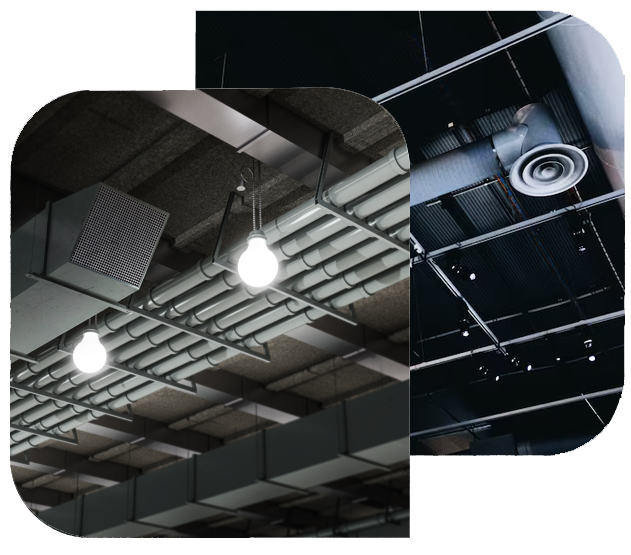
- Active fire protection (AFP) operates when a fire breaks out, and includes detection and alarm systems, automatic sprinklers, fusible link doors and shutters, emergency lighting and smoke ventilation systems. Vandalism of the water feed mechanism, damage to the operating valves, or simply ignorance will all harm AFP measures. A building with truly effective fire defense therefore needs more than one fire protection system.
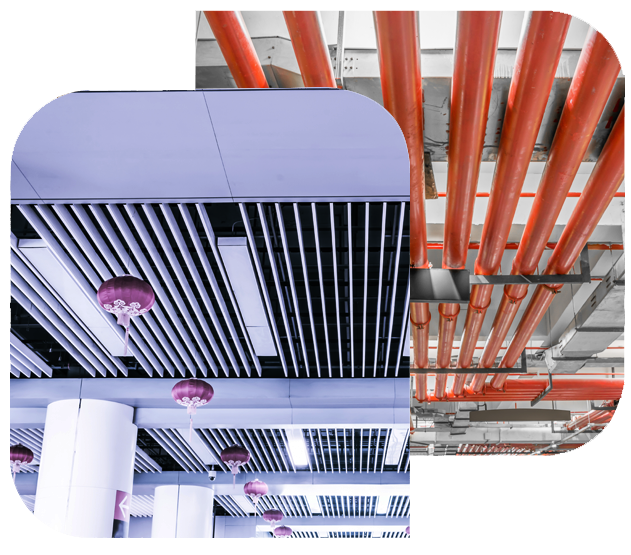
- Passive fire protection (PFP) is generally built into the structure so that the building can withstand fire for a specified period. PFP protects the structure and the lives of people inside the building in a fire by reducing or preventing the fire from spreading internally and externally, thereby maintaining the stability of the building and the safety and escape routes for the occupants.
- PFP Systems are always ‘switched on’ and do not require activating in order to fulfill their role. In contrast, AFP devices require some form of response and/or motion in order to work.
What are the methods of achieving Passive Fire Protection?
FaQ’s
The two most common grid ceiling arrangements are the “stab” and “hook” systems.
- Stab System: A stab grid system offers additional stability to the cross-tee since it crosses the main beam to prevent twisting. A Seismic Rating is typically assigned to stabilization systems that have this capability.
- Hook System: A hook grid arrangement, conversely, is often a lightweight grid ceiling.